


Vets get the most Google reviews by asking at the everyday good moments, such as puppy and kitten vaccinations, routine check-ups and collecting a pet after a routine operation, with a review stand on the reception desk and a link in the follow-up message. Just as important is knowing when not to ask. Never ask after euthanasia, a difficult diagnosis or an emergency that ended badly, and keep replies to reviews general so they don't reveal anything about a client or their animal.
Good moments to ask
Most of what happens in a practice is routine and goes well, and those visits are where reviews come from.
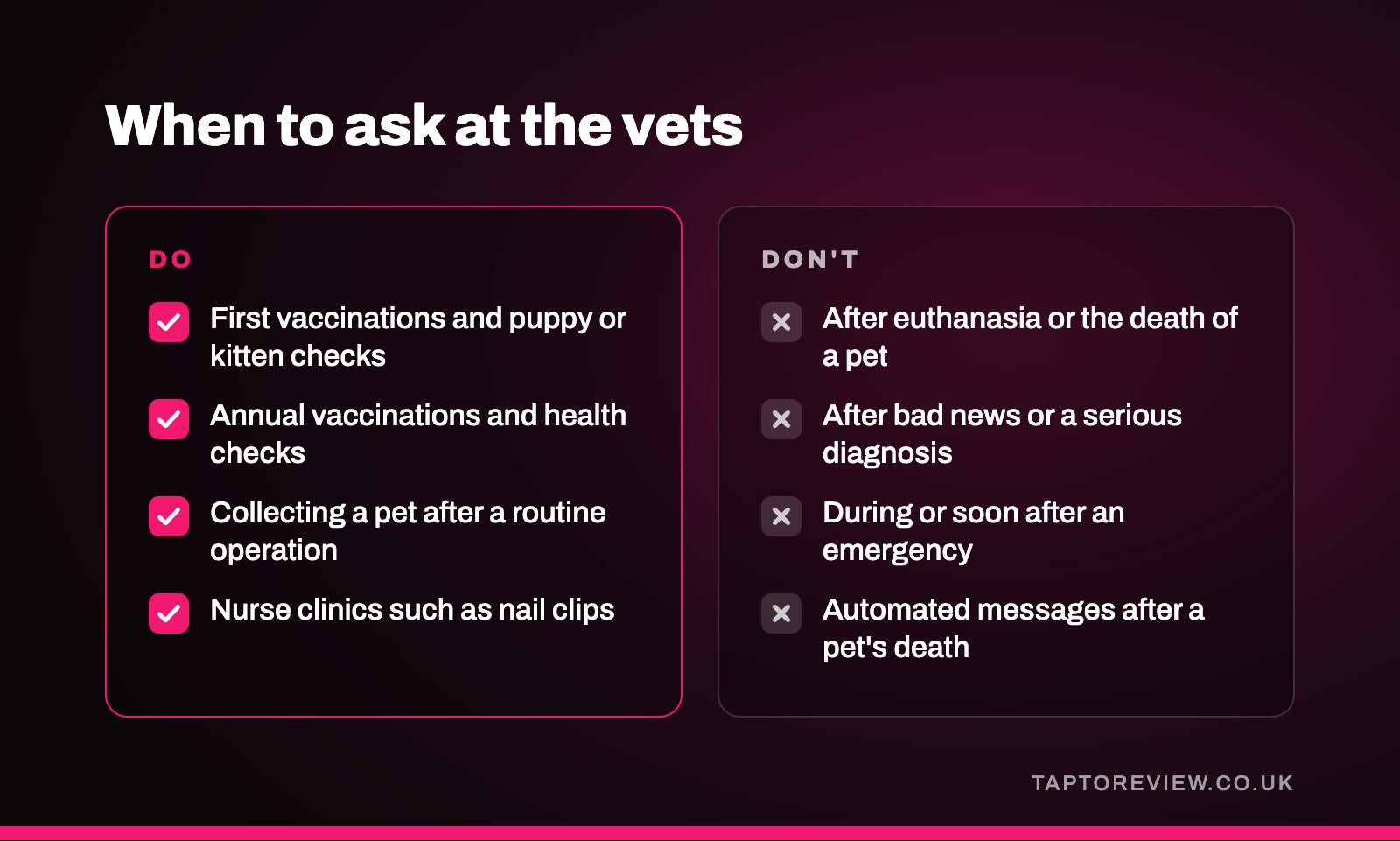
- First vaccinations and puppy or kitten checks. New owners are usually excited, chatty and grateful for the advice.
- Annual vaccinations and health checks. Ask at the desk while the client pays and books the next reminder.
- Collecting a pet after a routine operation. When a nurse brings the dog or cat out after a neutering or a dental, the relief is obvious.
- Nurse clinics. Weight checks, nail clips and similar appointments are quick and friendly, and a good chance to ask clients who don't come often.
When not to ask
Some visits should never end with a review request. Don't ask after euthanasia or the death of a pet, after giving bad news or a serious diagnosis, or during or soon after an emergency. Reception staff need to know this too, as they're often the ones holding the card or pointing to the stand.
Check any automated messages as well. If your practice software sends a follow-up text or email after each appointment, make sure it can't go to a client whose pet has just been put to sleep. If you already mark these records so that vaccination reminders stop, check that the same step stops review requests.
Leaving these clients out is about timing and kindness, and it's different from only asking clients you expect to be happy. Bad news doesn't mean someone was unhappy with the care, and some clients choose to write a review later on their own. Our guide to review gating explains what Google does and doesn't allow when it comes to choosing who to ask.
What reception can say
- "He's been really good today. If you're happy with the practice, a Google review would really help us. You can just tap your phone on the stand there."
- "We're an independent practice and a lot of new clients find us on Google, so reviews make a big difference."
Setting up the practice
- A Google review stand (£35) on the reception desk beside the card machine, where clients pay and book.
- A Google review card (£30) for nurses who bring pets out to owners after an operation, or for vets doing farm or home visits.
- Your review link in post-appointment emails or texts, with the exceptions above set up.
The stand and card arrive programmed with your own review link and there's no monthly fee. If your practice has several branches, each branch usually has its own Google profile, so each needs a stand or card set up with that branch's link.
Privacy in replies
The Royal College of Veterinary Surgeons expects vets and vet nurses to keep client information confidential, and its guidance on social media covers how to deal with negative comments online. In practice, that means replies to reviews should stay general. Don't confirm details of an animal's treatment, the diagnosis, the costs or anything said in the consulting room, even if the client has described it all in their review.
For a positive review, a warm, general thank you is enough, and you can pass thanks on to the team. For a negative review, such as one about fees or about how a difficult situation was handled, reply calmly, say you're sorry to hear it, and invite the client to contact the practice manager directly. If your practice is part of a larger group, check whether the group has its own policy on replying. Our guide on how to respond to Google reviews has examples of general replies.
Things to avoid
- Offering a free nail clip, money off a vaccination or a bag of treats in return for a review. Google doesn't allow incentives, and paying for reviews is illegal in the UK.
- Asking staff, or their friends and family, to review the practice.
- Arguing about clinical decisions in a public reply.
Our article on Google's review rules covers what's allowed.
Common questions
Is it all right to ask for a review after a pet has been put to sleep?
No. It's not the time, and it can cause real upset. Make sure automated review requests are switched off for those clients too.
Can a vet practice reply to Google reviews?
Yes, but keep replies general and don't discuss an animal's treatment, diagnosis or costs, even if the client has.
Where should a review stand go in a vet practice?
On the reception desk where clients pay and book. If your practice has a separate exit or quiet room for difficult appointments, keep the stand away from it.