


Physiotherapists and chiropractors can ask patients for Google reviews in the same way as any other business, but replies need real care, and a public reply should never confirm that someone is a patient or say anything about their treatment. The best time to ask is at the end of a course of treatment, when the patient is discharged and can judge the whole experience, with a review stand at reception and your review link in the follow-up message. Reviews help a lot in this field, because people in pain often book with a clinic they've never used before and rely on other patients' experiences to choose.

When to ask
A single session rarely tells a patient much, and someone halfway through a course of treatment may still be sore and unsure. The end of the course is the natural point, usually the final appointment or the session where you agree they don't need to come back. By then they know whether the treatment helped, how they were treated by the team, and whether the clinic was easy to deal with.
Ask at reception or as the patient is leaving, rather than in the treatment room. It keeps the clinical side separate, and patients are more relaxed once they're dressed and paying. For patients who come once or twice for a check or a sports massage, ask at the end of the visit.
What to say
- "Glad you're feeling better. If you're happy with how things went, a Google review would really help the clinic. You can tap your phone on the stand there."
- "We're an independent clinic and a lot of new patients find us on Google, so reviews make a big difference to us."
Keep the ask the same for every patient you discharge, not just the ones whose treatment went best.
Setting up the clinic
- A Google review stand (£35) on the reception desk beside the card machine, where patients pay and book.
- Your review link in discharge emails or follow-up texts, if your practice software sends them. Our guide to your Google review link shows where to find it.
- A Google review card (£30) for practitioners who do home visits or work pitch-side with sports clubs, where there's no reception desk.
The stand and card arrive programmed with your own review link, so the patient's phone opens your review page straight away, and there's no monthly fee.
Confidentiality in replies
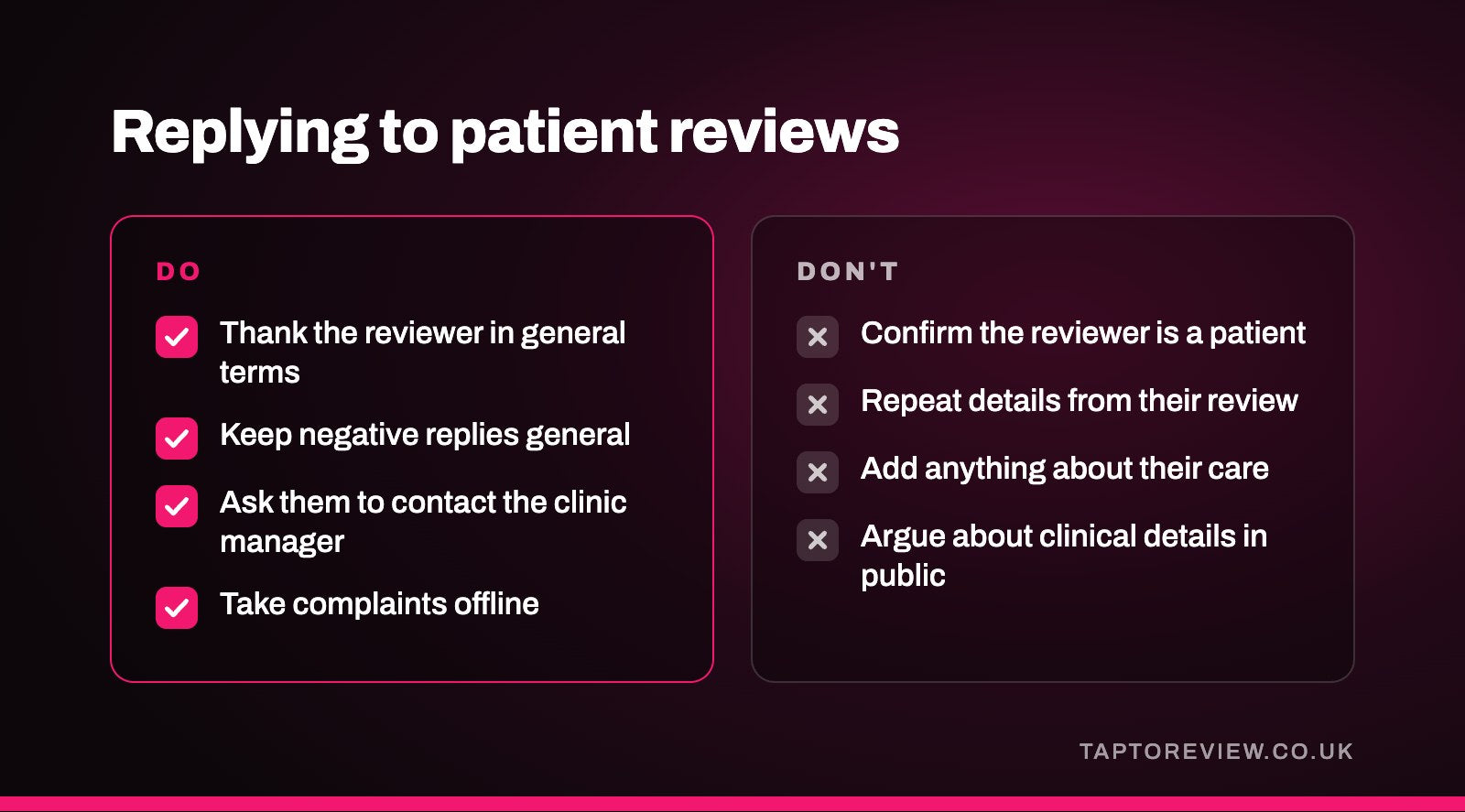
Physiotherapists are regulated by the Health and Care Professions Council and chiropractors by the General Chiropractic Council, and both expect patient confidentiality to be kept online as well as in the clinic. That includes replies to reviews. Even if a patient describes their injury and treatment in detail in their review, your reply shouldn't confirm that they're a patient, repeat any of the details, or add anything about their care.
For positive reviews, a general thank you works:
"Thank you for taking the time to leave a review. We're really pleased to hear about your experience with the team."
For negative reviews, keep it general and take it offline:
"We're sorry to read this and would like to understand more. Please contact our clinic manager on [number] so we can look into it."
Don't argue about clinical details in public, even when you're confident the reviewer has misunderstood something. Our guide on how to respond to Google reviews has more on tone.
Sharing reviews in your marketing
If you show reviews on your website or social media, they become part of your advertising. The Advertising Standards Authority treats claims in testimonials the same way as claims you make yourself, and it has published specific guidance for chiropractors on which conditions can be mentioned. A review saying a treatment cured a condition you couldn't advertise treating is best left on Google rather than reposted.
Things to avoid
- Offering a free session, money off a block of treatments or a gift in return for a review. Google doesn't allow incentives, and paying for reviews is illegal in the UK.
- Only asking patients whose treatment went well.
- Asking staff, or their friends and family, to leave reviews.
Our article on Google's review rules covers what's allowed.
Common questions
Can a physio reply to Google reviews?
Yes, but replies must protect confidentiality. Thank the reviewer in general terms and don't confirm they're a patient or mention their treatment.
When should a clinic ask patients for a review?
At the end of a course of treatment, at reception, when the patient can judge the whole experience.
Can patients name their physio or chiropractor in a review?
Yes, and it's common. Reviews go on the clinic's profile, and you can thank the team in general terms in your reply.