


Dental practices and private clinics can ask patients for Google reviews in the same way as any other business, but they need to take extra care with confidentiality, especially when replying. The best moment to ask is at the reception desk after the appointment, when the patient is paying or booking their next visit, with a review stand on the desk and your review link in the follow-up message. Never confirm details of a patient's treatment in a reply.

When to ask
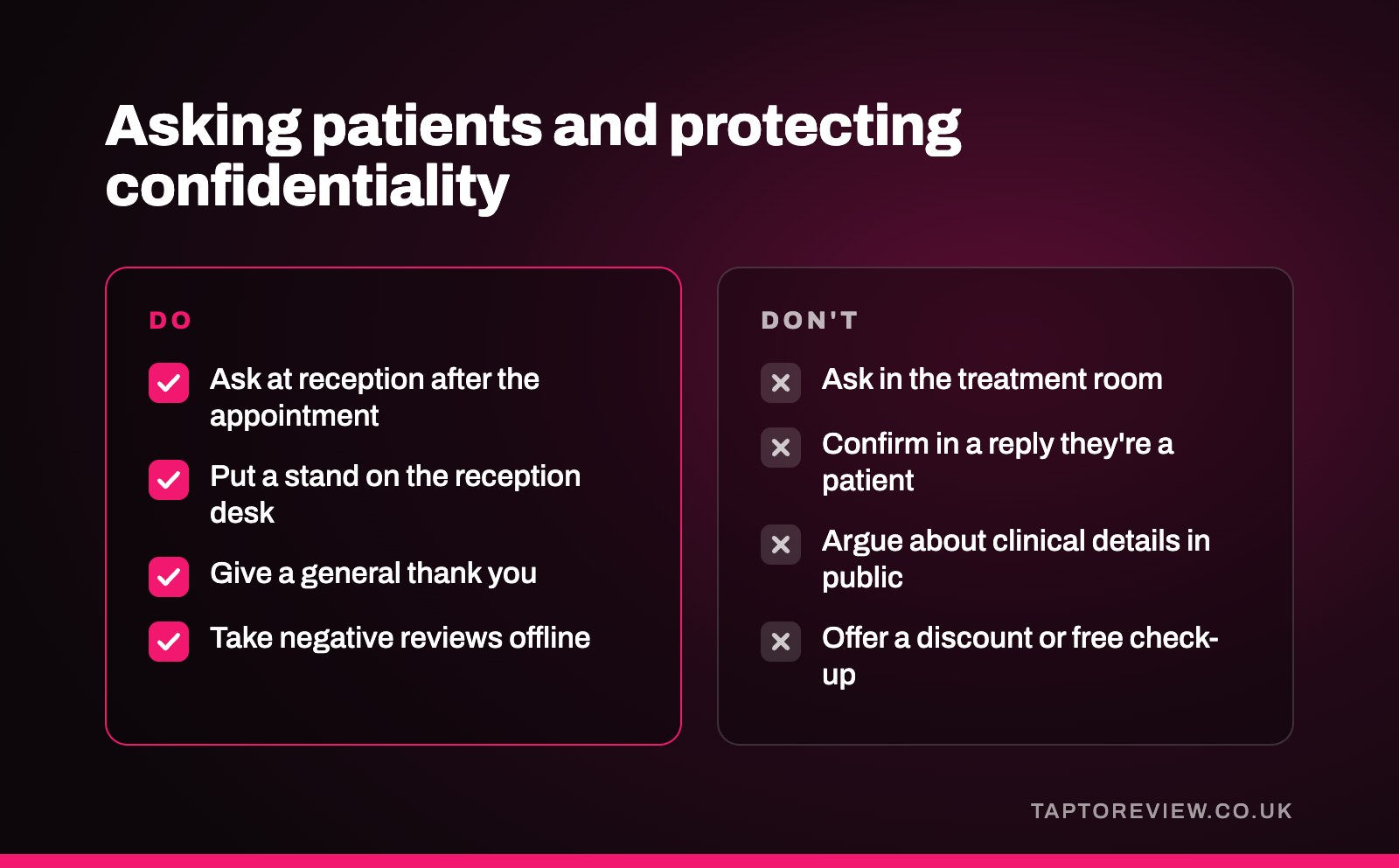
Ask at reception after the appointment, not in the treatment room. Patients are more relaxed once the appointment is over, and asking at the desk keeps the clinical side separate. For longer courses of treatment, the end of the final appointment is a natural point to ask.
What reception can say
- "Thanks for coming in today. If you're happy with the practice, a Google review would really help us. You can tap your phone on the stand there."
- "We're an independent practice and many new patients find us through Google, so reviews make a big difference."
Setting up the practice
- A Google review stand on the reception desk beside the card machine.
- Your review link in appointment follow-up emails or texts, if your practice software sends them.
- A QR code on the waiting room information board or on printed aftercare sheets.
Confidentiality in replies
Professional regulators, including the General Dental Council, expect clinicians to protect patient confidentiality online, and that includes replies to reviews. Even if a patient mentions their treatment in a review, your reply shouldn't confirm that they're a patient, add any detail about their care, or discuss their case.
For positive reviews, a general thank you works:
Thank you for taking the time to leave a review. We're really pleased to hear about your experience with the team.
For negative reviews, keep it general and take it offline:
We're sorry to read this and would like to understand more. Please contact our practice manager on [number] so we can look into it.
What not to do
- Don't offer a discount, a free check-up or whitening in exchange for a review.
- Don't only ask patients you think are happy.
- Don't ask staff, or their friends and family, to leave reviews.
- Don't argue about clinical details in a public reply.
Our article on Google's review rules covers what's allowed.
Why reviews matter for practices
People choosing a new dentist or clinic often have no recommendation to go on, so they search locally and compare ratings. Reviews that mention a friendly team, a gentle dentist or nervous patients being put at ease are particularly reassuring to people who are anxious about appointments.
Common questions
Can a dentist reply to Google reviews?
Yes, but replies must protect confidentiality. Thank the reviewer generally and avoid any detail about their treatment.
Can patients review individual dentists?
Reviews are left on the practice's profile, and patients often mention the dentist they saw. Some clinicians also have their own profiles.
Where should a review stand go in a practice?
On the reception desk where patients pay and book their next appointment.