


Solicitors and accountants get the most Google reviews by asking at the natural end of a piece of work, such as completion on a house purchase or the day the tax return is filed, and by putting the review link in the closing email or letter. The bigger difference from other businesses is confidentiality. A reply to a review must never reveal anything about the client or their matter, and some clients will reasonably prefer not to be publicly linked to their solicitor at all. Reviews still matter a great deal, because people choosing a firm often have no personal recommendation to go on.

When to ask
Ask when the work is finished and the client can see the result. Asking halfway through a matter puts the client in an awkward spot, and they can't yet judge how it went.
- Conveyancing. Completion day, or the day after, once the client has the keys or the sale money has arrived.
- Wills and powers of attorney. Once the documents are signed and the client has their copies.
- Probate. Only once the estate has been wrapped up, and with care, as the family is still grieving.
- Self-assessment clients. Once the return is filed and the client knows what they owe or are getting back.
- Business clients. When the year-end accounts are signed off, or after the first full year of working together.
For sensitive work such as divorce, family disputes, employment claims or criminal matters, think carefully before asking. Some clients will be glad to help, but a Google review usually shows the reviewer's name, and many people won't want that visible. Ask in a way that makes it easy to say no.
What the SRA says
The Solicitors Regulation Authority has published guidance on engaging with online reviews. It says that encouraging clients to leave a review, for example by sending them a link, is a reasonable thing to do. It also says you can respond to reviews from current or former clients as long as you don't disclose confidential or privileged information, and that if a review contains confidential details, your reply shouldn't go any further than what the client has already said. The SRA also says it wouldn't expect firms to pressure clients or review sites into removing negative reviews.
Accountants who belong to a professional body such as the ICAEW or ACCA have a duty of confidentiality under its code of ethics, which applies to review replies in the same way.
Ask in the closing email
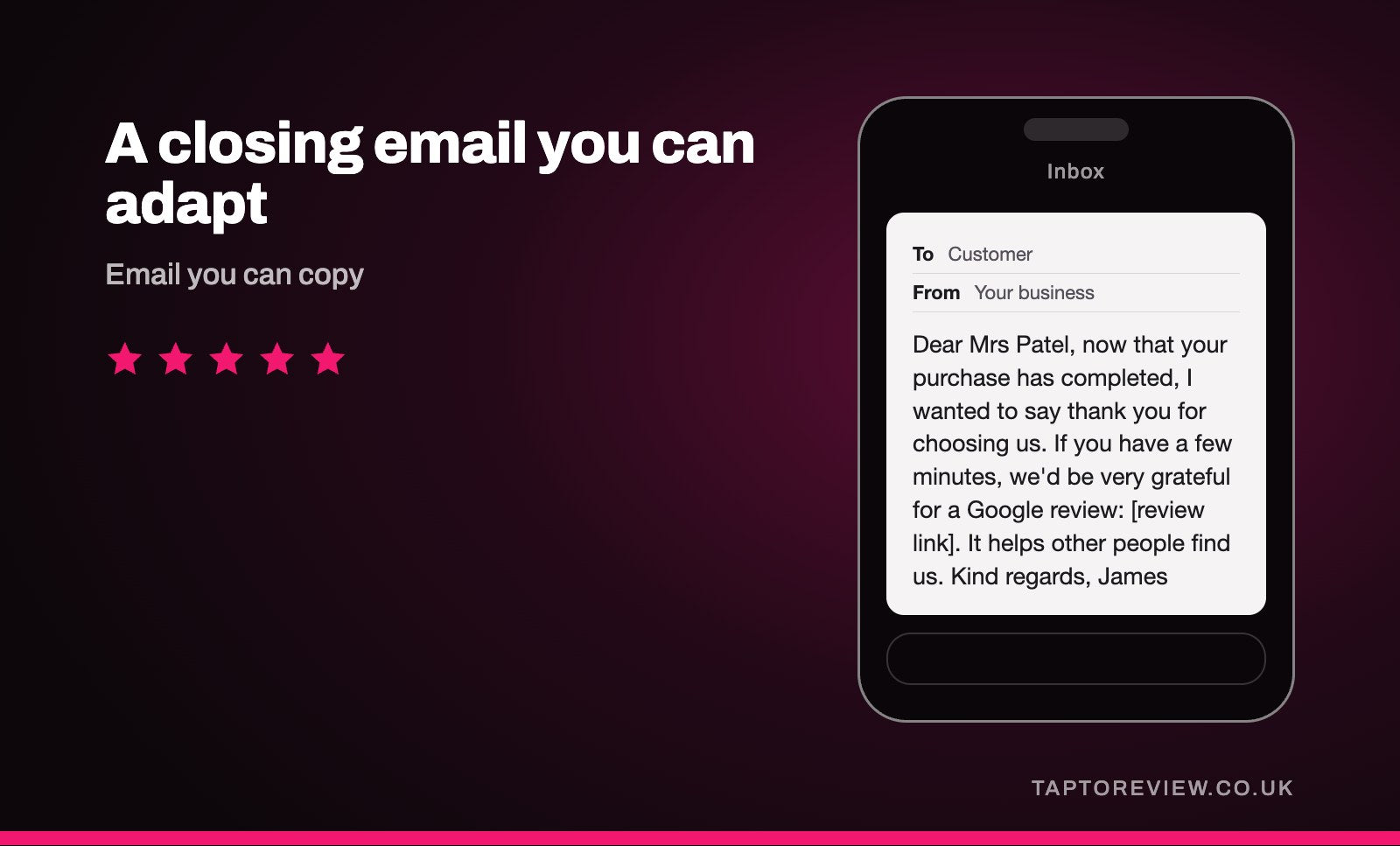
Most legal and accountancy work ends with an email or letter confirming that the matter is closed, or that the return has been filed. That's the right place for the review request, since the client will read it and can follow the link when it suits them. Here's an email you can adapt:
"Dear Mrs Patel, now that your purchase has completed, I wanted to say thank you for choosing us. If you have a few minutes, we'd be very grateful for a Google review: [review link]. It helps other people find us. Kind regards, James"
Our review request email templates have more versions, including subject lines.
In the office
If clients visit your office to sign documents, collect keys or drop off paperwork, a Google review stand (£35) on the reception desk gives them a quick way to leave a review, as they only need to hold their phone near it for your review page to open. A Google review card (£30) suits fee earners who meet clients at signing appointments or at the client's own premises. Both arrive programmed with your own link, with no monthly fee. A stand works best in a high-street firm with regular walk-in clients, and much less so if most of your work is done remotely.
Replying to reviews
Keep replies short and general. For a positive review, thank the reviewer and the team without mentioning the matter, the property, the outcome or anything else about their affairs, even if they did.
For a negative review, reply calmly and professionally, don't argue the details in public, and invite the reviewer to contact the firm directly. The SRA's guidance suggests that if you're unsure what to say, a simple acknowledgement followed by contacting the client directly is fine. Our guide on how to respond to Google reviews has examples of general replies, and if you think a review crosses a line, our article on whether a bad review is defamation explains the options.
Things to avoid
- Offering a fee discount or a gift in return for a review. Google doesn't allow incentives, and paying for reviews is illegal in the UK.
- Only asking clients whose matters went well.
- Asking staff, or their friends and family, to post reviews.
Common questions
Are solicitors allowed to ask clients for Google reviews?
Yes. The SRA's guidance says encouraging clients to leave online reviews, for example by sending a link, is fine.
Can a solicitor reply to a negative Google review?
Yes, as long as the reply doesn't disclose confidential or privileged information or go beyond what the client has already said.
When should an accountant ask for a review?
Once the tax return is filed or the year-end accounts are signed off, when the client can see the work is done.